
The Pine Tree Riot
How a fight over tree trunks exposed the weak hinge of an empire

In April 1772, a British sheriff named Benjamin Whiting rode into a small town in New Hampshire with a warrant.
His target was not a murderer, a smuggler, or a rebel leader.
It was a sawmill owner.
The charge was also odd. Ebenezer Mudgett and other local mill owners had cut white pine trees that the British Crown had reserved for itself. These were not ordinary trees. They were tall, straight, and strong enough to become masts for British warships.
For Britain, these trees were naval assets.
For the colonists, they were livelihood.
That gap became the problem.
Whiting arrested Mudgett and released him on bail. That night, Whiting and his deputy stayed at the Pine Tree Tavern. By morning, a group of men had entered the tavern with their faces blackened with soot.
They pulled Whiting out of his room and beat him with switches. One lash for every tree in dispute. Then they cut the ears and shaved the manes and tails of the officials’ horses, forced them to ride out, and sent them away in public humiliation.
Eight men were later caught.
Their fine was twenty shillings each.
That may be the most important part of the story. The British Empire could pass the law. It could mark the trees. It could send the sheriff.
But it could no longer make people fear the punishment.
Why Britain cared about pine trees
The British Empire ran on ships.
Ships carried soldiers, tea, sugar, cotton, guns, officials, letters, and laws. Without ships, Britain was just an island with ambition.
And ships needed masts.
A large warship needed tall, straight, knot-free trees to hold its sails. Britain had already used up much of its own suitable timber. New England had what Britain needed: the eastern white pine.
These trees could grow very tall and very straight. Perfect for masts.
So the Crown began marking the best trees with the King’s Broad Arrow. Three cuts on the trunk meant the tree belonged to the Crown. Even if the tree stood on land a colonist thought was his own.
That is where the conflict began.
From London, this looked like smart resource planning.
From New Hampshire, it looked like theft.
A white pine was not an imperial asset to the people living there. It was a house beam, a barn, a floorboard, a saleable log, a winter income. The same tree had two meanings. The empire saw strategy. The local people saw survival.
The hidden material behind history
We usually remember history through big words: liberty, taxation, revolution, empire.
But under those words sit materials.
Wood. Salt. Cotton. Coal. Oil. Water. Copper. Chips.
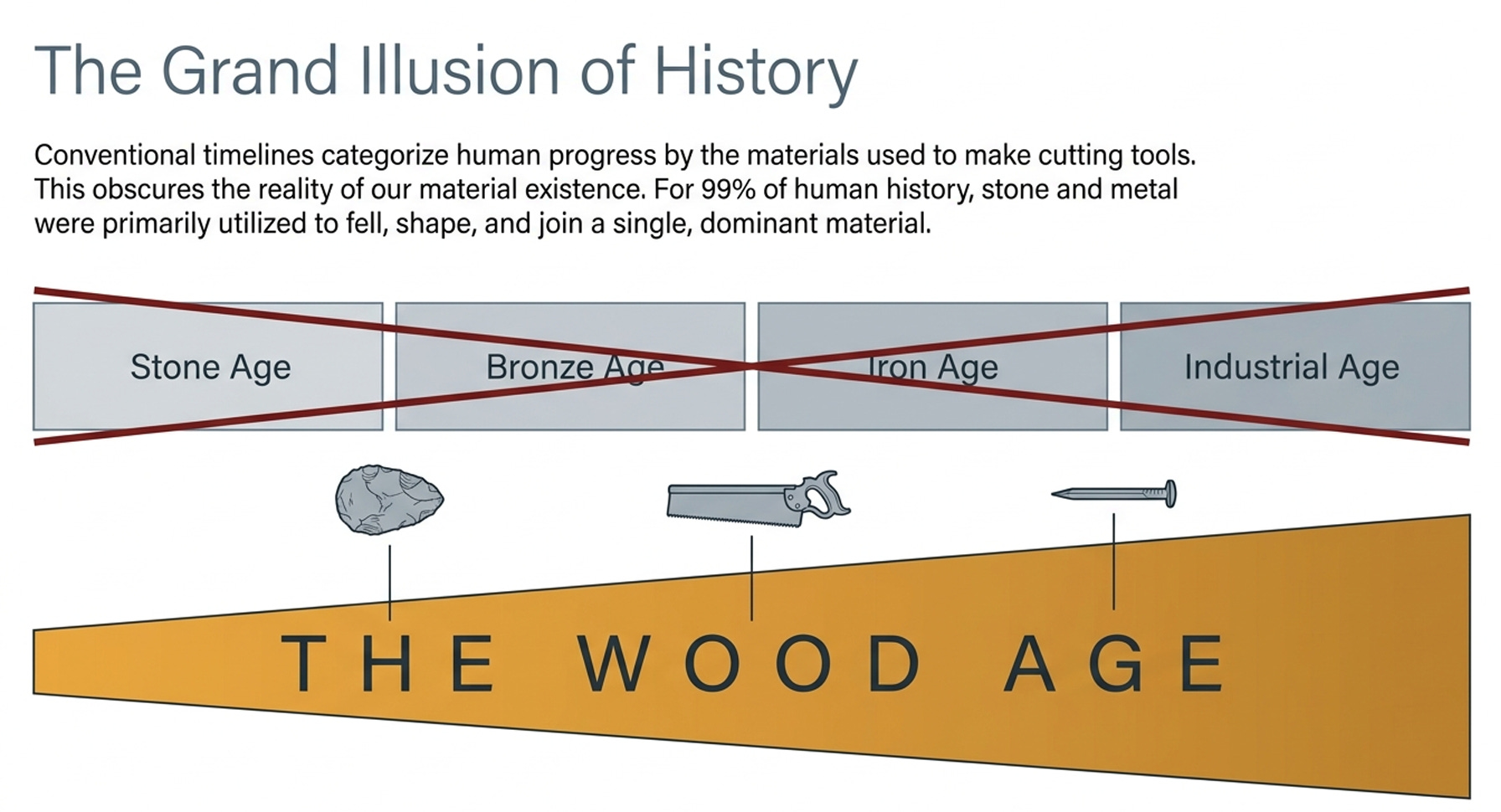
Roland Ennos, in The Wood Age, makes a useful point. We call early human history the Stone Age, Bronze Age, and Iron Age. But for most of human life, wood may have mattered more than all of them.
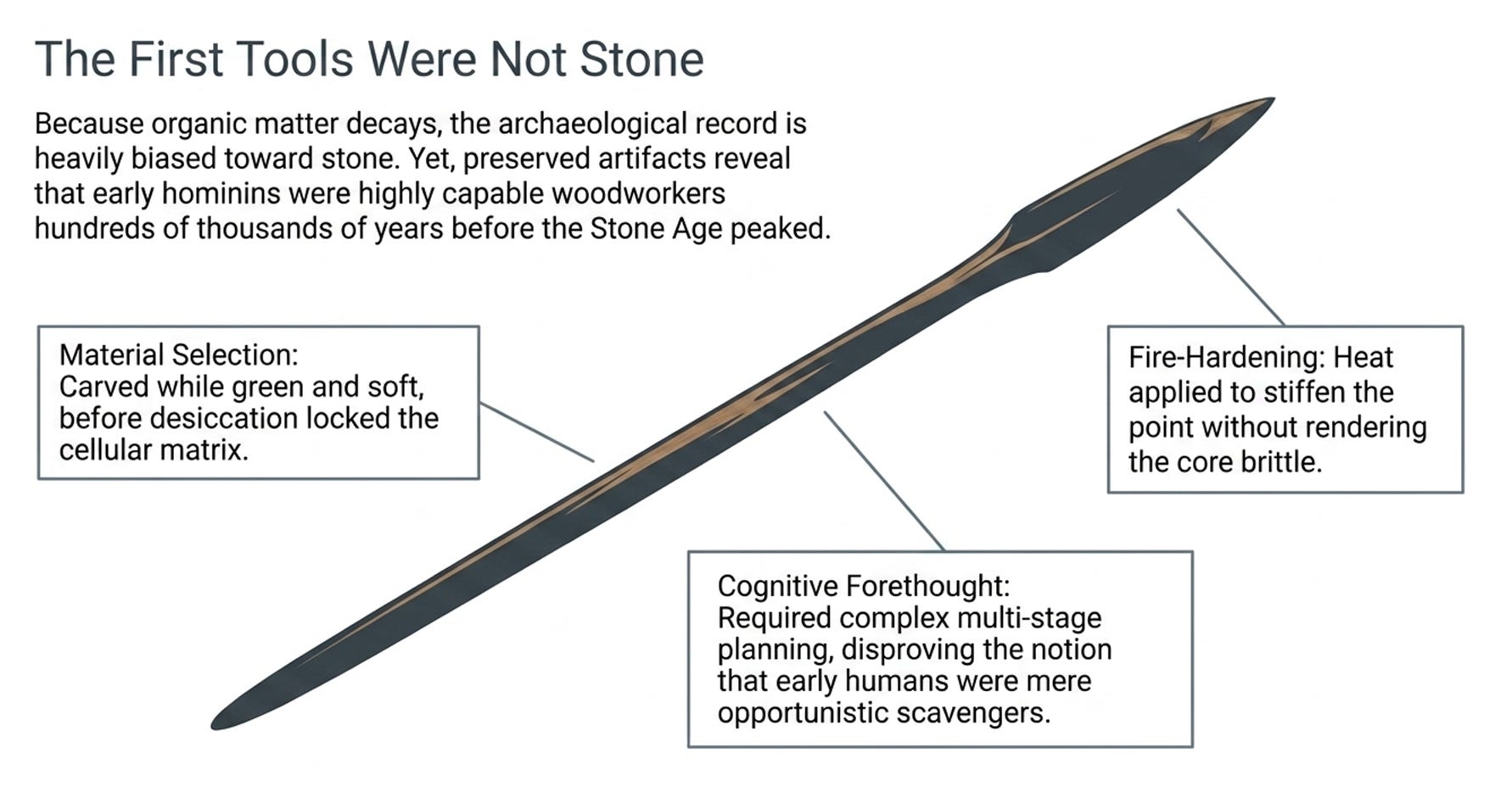
Wood gave us houses, wheels, carts, boats, bridges, ploughs, fires, tools, barrels, furniture, and ships. Stone and metal were important, but wood made daily life and long-distance power possible.
The Pine Tree Riot is interesting for this reason. It shows the material hiding inside politics.
The American Revolution was not caused by trees alone. That would be too simple. But trees were part of the larger fight over who controlled land, labour, trade, taxes, and resources.
The Crown was not only asking people to obey. It was claiming first right over the best material in their own forests.
That is when law starts feeling like occupation.
The small revolt before the big one
The Pine Tree Riot happened before the Boston Tea Party.
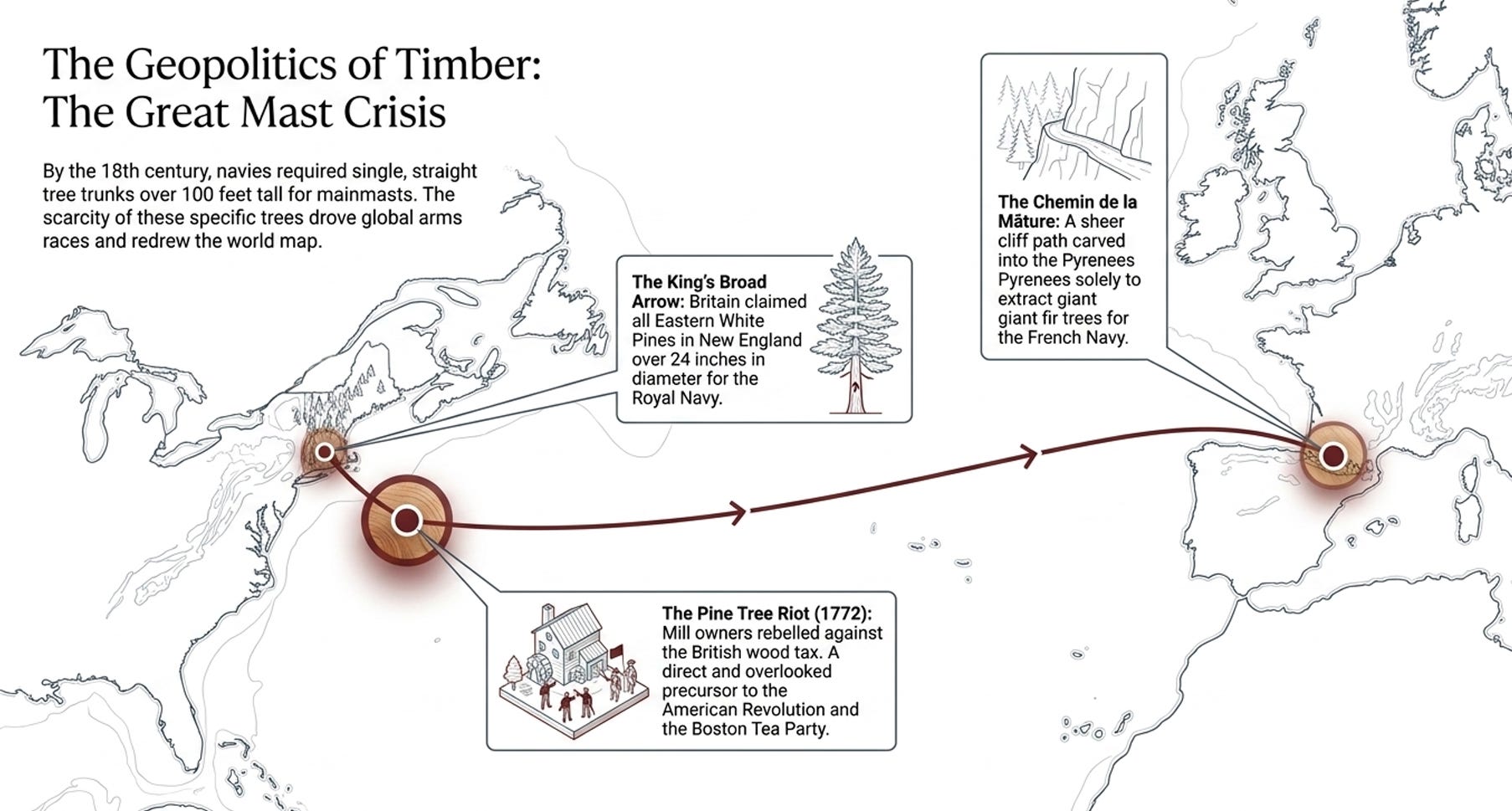
It did not become as famous. Tea is easier to remember. A harbour, a ship, men in disguise, boxes thrown into the water. Clean image.
Trees are less dramatic.
But the tree story may tell us something deeper.
The British state could still write laws. It could still send officials. It could still say, “This belongs to the Crown.”
But on the ground, law had to pass through taverns, sawmills, forests, local judges, local anger, and local economics.
That is where empire often weakens first. Not in Parliament. Not on the battlefield. But in enforcement.
When ordinary people stop believing the rule is legitimate, the state has to use more force. When it cannot use enough force, the rule becomes a performance.
The Pine Tree Riot showed that Britain could own the forest on paper and still lose the road out of town.
Why this old story still matters
This is not just a story about trees.
Every age has some material it takes for granted until that material becomes scarce, controlled, taxed, or politicised.
For Britain, one such material was white pine.
For us, it may be oil, lithium, copper, rare earths, water, semiconductors, compute, land, or even clean human attention.
The pattern is familiar.
A system grows around a material. The material becomes invisible because it works. Then someone tries to control it too tightly, extract it too carelessly, or claim too much ownership over it. The people closest to the material feel the pressure first.
That is when a resource dispute becomes political.
That is when a tree becomes a flag.
And somewhere in the story, a sheriff discovers that an empire can be powerful at sea and still helpless inside a tavern.